

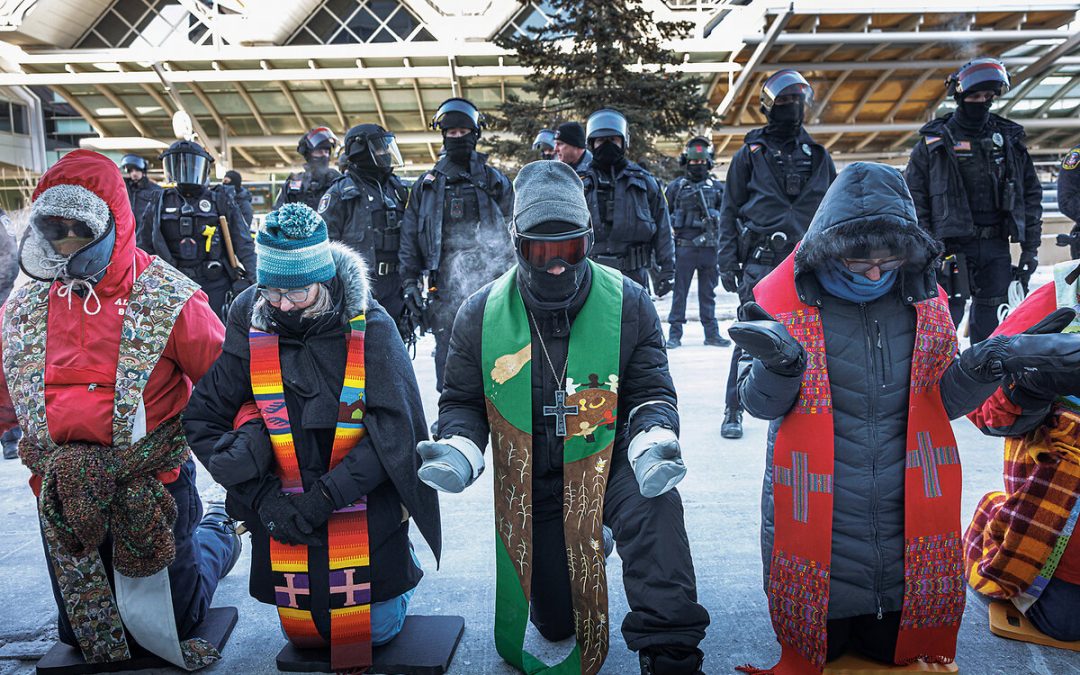
Clergy members and community activists gather at Minneapolis-St. Paul International Airport in Minnesota to protest deportation flights and to urge airlines to call for an end to the Department of Homeland Security’s operation in the state, Jan. 23, 2026. (Kerem Yücel/Minnesota Public Radio/AP)
One Sunday, shortly after federal immigration agents shot and killed Alex Pretti last month, the Rev. Doug Pagitt looked to his Lectionary, a liturgical calendar, to see a timely excerpt from the book of Isaiah beginning, “Shout out, do not hold back!”
Mr. Pagitt has been doing that for weeks now, in words and actions, alongside fellow Minnesotans. He is a pastor who preaches at a congregation in southern Minneapolis that includes immigrants and people hosting Afghan refugees. Two of his children have Mexican heritage and now carry their passports everywhere they go. He regularly gathers with other faith leaders at churches where, he says, federal officers hover on Sunday mornings. The clergy, sporting clerical collars, appear to create a buffer, and federal agents often leave, he says. (Department of Homeland Security Assistant Secretary Tricia McLaughlin, in an email to the Monitor, said federal agents do not raid churches, adding that law enforcement uses “common sense” to decide whether to enter a church to pursue someone the administration says is a threat to public safety.)
Thousands of America’s clergy have joined the hundreds in Minneapolis standing with immigrants and communities against federal immigration enforcement. The clerics’ faiths share an imperative to “welcome the stranger.” But how Christian denominations interpret and prioritize that mandate differs.